Home / FAQs
Exterior Cleaning FAQs
The questions we get asked most often, answered straight — pricing, methods, what is safe on which surface, and how long a proper clean actually lasts.
What it costs.
How much does exterior cleaning cost?
It depends entirely on the size and condition of the surface, so we do not publish a fixed price list — a small terraced roof and a rambling farmhouse are not the same job. Send a photo or two by email or text and you will get a clear, fixed price back, usually within 24 hours and with no obligation.
Is the quote free, and is it fixed?
Yes to both. Quotes are free, and the price we give you is the price you pay. We do not work on day rates that creep, and we do not add extras at the end for things that should have been in the quote.
Do you need to visit before quoting?
Usually not. Two or three photos taken from the ground, plus your town or postcode, is normally enough. For larger or more complicated jobs we will come and look before pricing it.
Do you take on commercial work?
Yes — forecourts, car parks, farm buildings, holiday lets and blocks of flats as well as private houses. Commercial jobs are quoted the same way and can be scheduled out of hours where access needs it.
What is safe on which surface.
Will pressure washing damage my roof?
Yes, and badly — which is exactly why we do not use it on roofs. High pressure strips the protective surface off concrete tiles, dislodges them and drives water under the laps. Roofs get hand clearing and a low-pressure softwash only.
Can render be pressure washed?
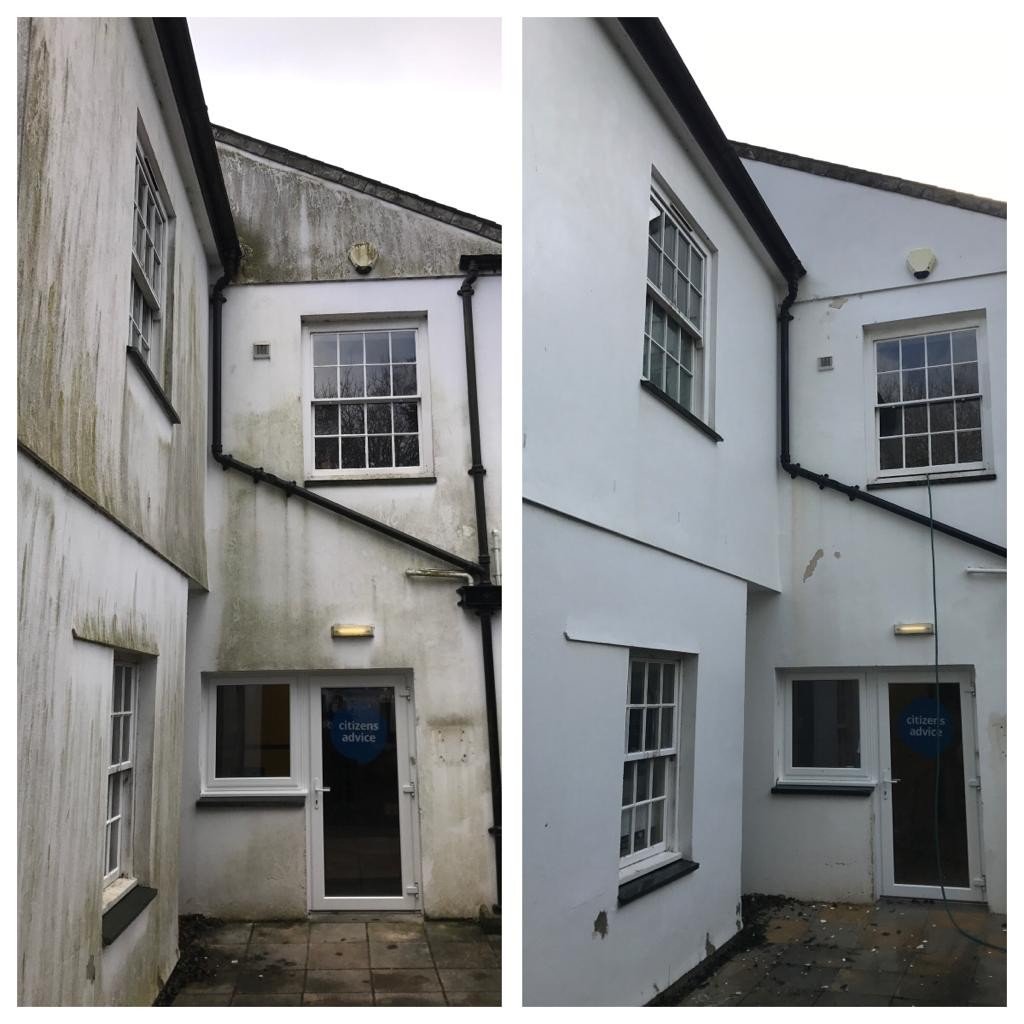
No. A lance will take the coating off, open up hairline cracks and force water into the wall behind. Render is softwashed at low pressure with a treatment that kills the algae rather than blasting it off.
What about old or soft stone?
Soft limestone like Ham stone and old lime-mortared walls are the easiest things in the county to ruin. Their weathered outer face took centuries to form and does not come back. Those get a gentle, treatment-led clean — or, if the stone is already failing, honest advice to repair before cleaning.
Are the chemicals you use safe for plants and pets?
We use the treatments at the correct dilution and protect borders, ponds and drains as we work, washing everything down before we leave. Keep pets indoors while we are on site and there is nothing to worry about once the surfaces are dry.
Are you insured?
Yes — fully insured for both domestic and commercial work. Happy to send details over before we start if you would like to see them.
How the job actually runs.
Do I need to be at home?
Not usually. As long as we can get to the areas being cleaned and there is an outside tap or water source, you are welcome to be out. We will let you know when we arrive and when we are finished.
How long does a job take?
Most domestic roofs, drives and patios are a single day. Larger properties, or jobs where several surfaces are being done together, may run to two. We will tell you which when we quote.
What do you need from me?
Access to the surfaces, an outside tap, and somewhere to park reasonably close by. If there are gates, dogs or awkward access, mention it when you enquire so we plan for it.
What happens to the mess?
It comes with us. Moss and debris are cleared, gutters and downpipes are cleared of what comes down during a roof clean, and the surrounding areas are washed down before we leave.
What if it rains?
Light rain is not usually a problem for most of what we do. Heavy or persistent rain, high winds or frost will move a job — we would rather rebook than do it badly. You will hear from us the day before either way.
How long it lasts.
How long before the moss and algae come back?
The clean alone is not what keeps it away — the biocide treatment afterwards is. Treated roofs and render typically stay clear for several years. Heavily shaded surfaces under trees will always regrow faster than open, sunny ones.
Do you re-sand block paving afterwards?
Yes. Cleaning a block drive washes the jointing sand out, so kiln-dried sand goes back in afterwards. That is what keeps the blocks locked together and slows the weeds down.
Should my patio or decking be sealed after cleaning?
It depends on the surface. Some benefit from it, some do not need it, and sealing a surface that is still damp underneath causes more problems than it solves. We will give you a straight answer for your specific patio or deck.
How often should this be done?
Drives and patios usually want doing every couple of years. A treated roof should go considerably longer than that. If someone tells you your roof needs cleaning every year, be suspicious.
Ask us directly.
If your question is not here, send it over with a photo of what you are looking at. You will get a straight answer, whether or not it turns into a job.
Got a job in mind?
Send a photo and we will come back to you with a clear, fixed price within 24 hours. Free, no obligation, no pressure.