
Frost is the whole story
Water expands by roughly nine per cent when it freezes. That is a small number with enormous consequences when the water is trapped inside a joint, under a block, in the pores of a concrete slab or in a crack in tarmac. Every freeze-thaw cycle levers the surface apart a fraction further, and the county gets plenty of them between December and March.
A dry driveway shrugs that off. A driveway holding water in a dozen places does not. So winter preparation is really one job with several parts: get the water out, and stop more getting in.
The jointing sand comes first
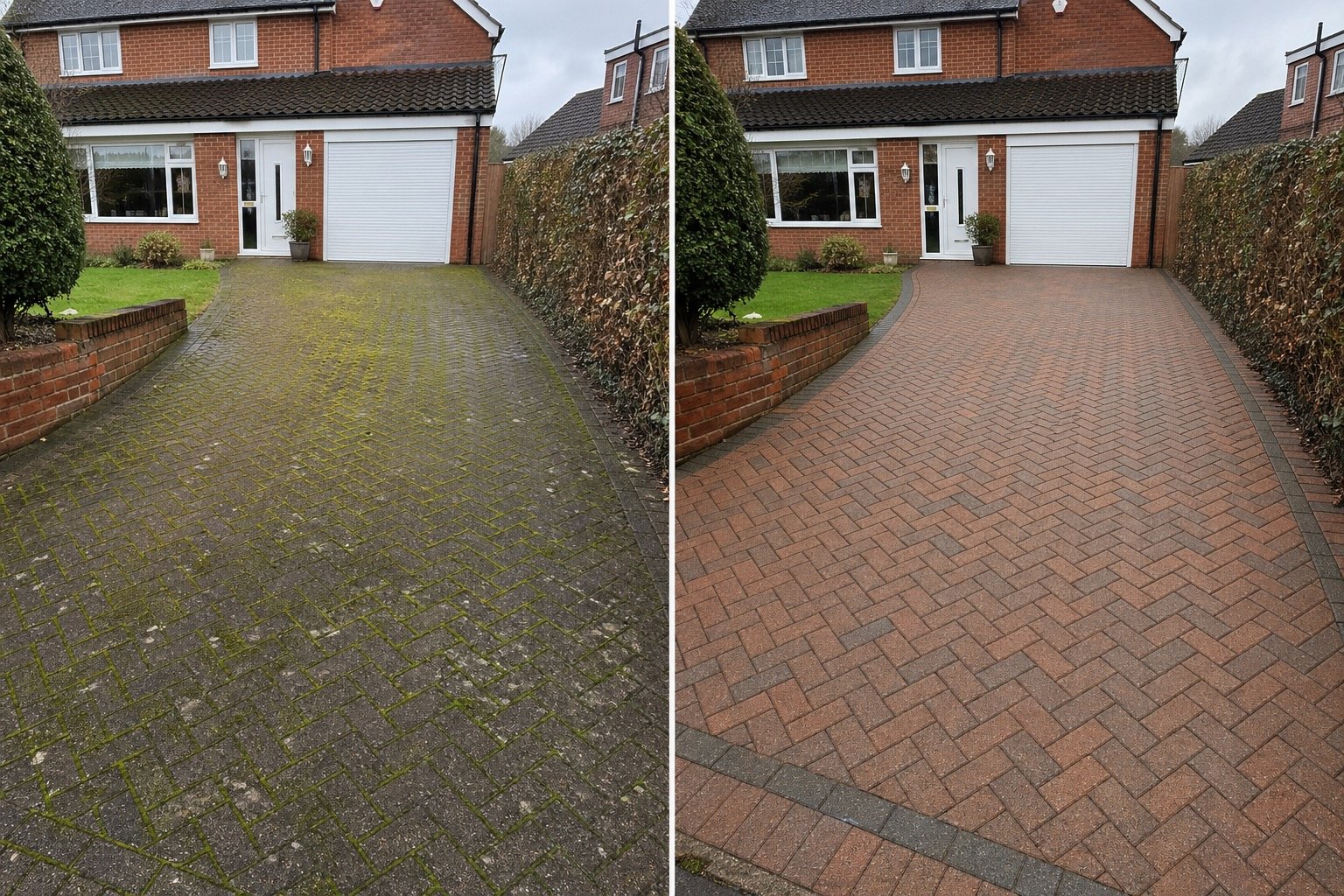
On block paving, the kiln-dried sand in the joints is what makes the whole surface behave as one interlocked slab rather than a few hundred loose pavers. Joints that have been washed out over the years hold water, grow weeds, and let individual blocks rock under a car.
Rocking blocks pump water down into the bedding layer every time you drive over them, and that is how a sub-base starts to wash about. Refilling the joints before winter is cheap; relaying a sunken bay in spring is not. It is covered in more depth in our guide on green, weedy block paving.
Find the standing water
The next time it rains properly, go and look. Puddles that sit for more than an hour after the rain stops are telling you something:
- A shallow dip where the car parks is usually sand loss and consolidation. Often improves a lot with cleaning and re-sanding.
- A hollow that holds water every time means the sub-base has settled or washed. That section wants lifting and relaying — no amount of cleaning fixes it.
- Water pooling against the house is the one to deal with urgently. Ground saturated against a wall all winter is a damp problem waiting to happen.
- A blocked gully or channel drain full of silt and leaves. Ten minutes with a trowel now saves a lot of standing water later.
Weeds and moss
Weeds in a driveway do not come up from the soil beneath — there is a compacted sub-base in the way. They germinate in debris that has settled into the top of the joints. Clearing them and refilling the joints removes the seedbed rather than just the plants, which is why it lasts so much longer than pulling them.
Moss and algae matter for a different reason: a green driveway in frost is genuinely dangerous underfoot, particularly on a slope, and most people are carrying shopping when they find out.
What can wait until spring
Not everything needs doing now, and it is worth being honest about which:
- Sealing should wait. A surface sealed while damp underneath traps moisture in exactly the conditions that cause frost damage. Spring, on a dry surface, is the right slot.
- Tarmac re-colouring wants warmth and dry weather to cure properly — see tarmac cleaning and re-colouring.
- Relaying sunken sections can be done in winter but is pleasanter and easier for everyone in better weather, unless the dip is causing an active problem.
Cleaning, weeding, re-sanding and clearing drainage are all autumn jobs. The finishing work is a spring job.
What about salt and grit?
Rock salt is hard on concrete and block paving over time, and the run-off is hard on planting. If you need grip on a slope, sharp sand or grit gives traction without the chemical attack. Keeping the surface free of algae in the first place does more for grip than anything you scatter on top.
Full detail of how we approach the job is on the driveway cleaning page, and we cover the whole of North Dorset and South Somerset.
Is autumn too late to clean a driveway?
No — it is a sensible time. What matters is that the surface dries enough for the jointing sand to go back in properly, so we plan around the weather rather than forcing it.
Can you re-sand without cleaning first?
You can top up joints, but sand goes into a dirty joint badly and does not pack down. Cleaning first is what makes the re-sand actually work.
My drive floods by the garage. Can cleaning fix it?
Probably not on its own — that is usually levels or drainage rather than dirt. We will tell you if that is what we are looking at instead of taking money for a clean that will not solve it.
Drive looking tired?
Send a photo and we will come back with a fixed price within 24 hours — cleaning, weeding and re-sanding included, not bolted on.