
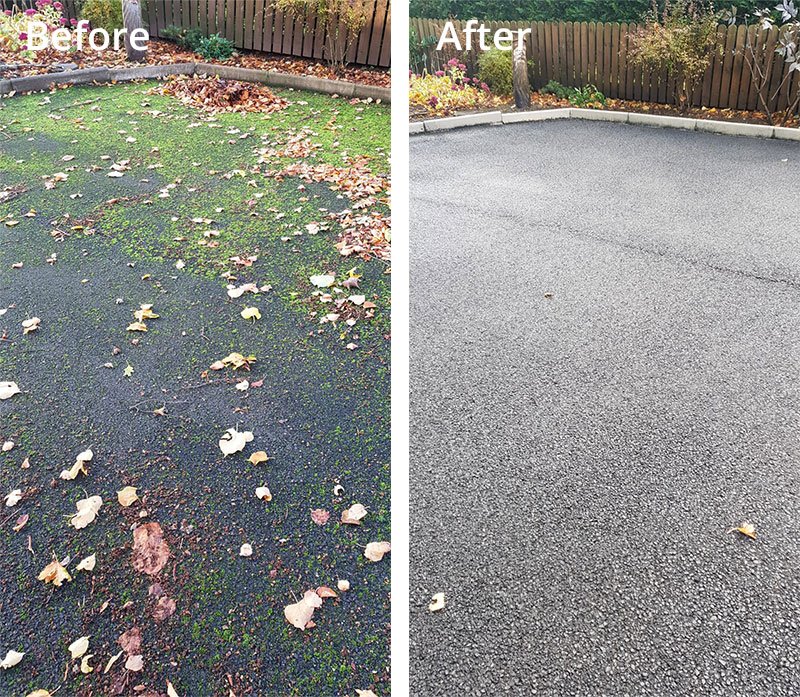
What is actually happening
Tarmac is stone aggregate held together by bitumen. The bitumen is the black part and it is also the glue. Ultraviolet light breaks it down over time — a process called oxidation — and as the binder at the surface degrades, two things happen at once. The black fades to grey, and the stone underneath is progressively less well held.
So fading is not purely cosmetic. It is the visible symptom of the surface binder wearing out, which is why a badly faded drive also tends to shed loose grit.
What makes it worse
- Sun. South-facing, open drives fade fastest. A shaded drive keeps its colour longer but grows more moss instead — you pick your problem.
- Fuel and oil. Diesel and petrol dissolve bitumen. A drip tray under a leaking car is cheaper than the repair.
- Standing water. Water sitting in a dip gets into the surface and, in frost, breaks it apart from within.
- Weeds through cracks. Once a root is in a crack it widens it every season.
- Turning wheels when stationary. Power steering against a hot surface in summer scuffs and tears it.
What re-colouring actually is
A tarmac restorer is a bitumen-based product applied after a deep clean. It soaks into the degraded surface rather than sitting on top of it like paint, restoring the black colour and re-binding the loose surface aggregate.
That distinction matters. A coating that sits on the surface will lift, flake and look worse than what you started with — and once it starts peeling there is no tidy fix. A penetrating restorer does not peel because it is part of the surface rather than a film over it.
The sequence is: deep clean to get the surface genuinely clean and free of moss and oil, let it dry completely, then apply the restorer evenly. Skipping the drying step is the most common way this job goes wrong. Full detail on the tarmac cleaning and re-colouring page.
Timing — and why this is a spring job
Restorer needs a dry surface and reasonable temperatures to cure. Applying it to damp tarmac in November traps moisture underneath and gives a poor, patchy finish that will not last.
So the honest advice in autumn and winter is: clean it now if it needs cleaning — moss on a tarmac drive is slippery and holds water going into frost — and book the re-colour for spring. Anyone offering to re-colour tarmac in a wet English November is prioritising their diary over your driveway.
When a drive is past re-colouring
Restorer fixes colour and surface binding. It does not fix structure. If any of these apply, the conversation is about repair or relaying, not cleaning:
- Cracks wide enough to put a finger into, or a network of interlinked cracking across an area
- Potholes, or sections where the surface has broken up entirely
- Areas that flex or feel spongy underfoot, which means the base below has failed
- Edges crumbling away where there is no restraint holding them
We would rather tell you a drive needs relaying than take payment for making a failing surface briefly black.
Keeping it longer
Keep oil off it, keep water moving off it, deal with weeds while they are small, and clean the moss off before winter. On a typical drive around Dorchester, Yeovil or anywhere else we cover, that is the difference between re-colouring every four or five years and needing a new surface a decade early.
How long does re-colouring last?
Typically several years, depending on sun exposure and traffic. A south-facing drive used by two cars daily will want redoing sooner than a shaded one used occasionally.
Is it just paint?
No — and it should not be. Paint sits on top and flakes. A proper restorer is bitumen-based and soaks into the surface, which is why it does not peel.
Can you clean tarmac without re-colouring?
Yes, and in autumn that is often exactly the right job. Cleaning removes the moss and makes it safe; the colour work can follow in spring.
Tarmac gone grey?
Send a photo and we will tell you whether it wants cleaning now and re-colouring in spring — or something more than that.